
A Sip of Perspective
The world is noisy. Wisdom often arrives quietly—sometimes while staring into a fire, sometimes halfway through a respectable ale.
“A full cup teaches gratitude. An empty cup teaches planning.”
Rules from the Cloister
- Listen twice before speaking once.
- Never confuse being busy with being useful.
- Share what you know, especially when it helps another person climb.
- If you must make a mistake, make it interesting enough to become a good story.
Keepers of the Written Word
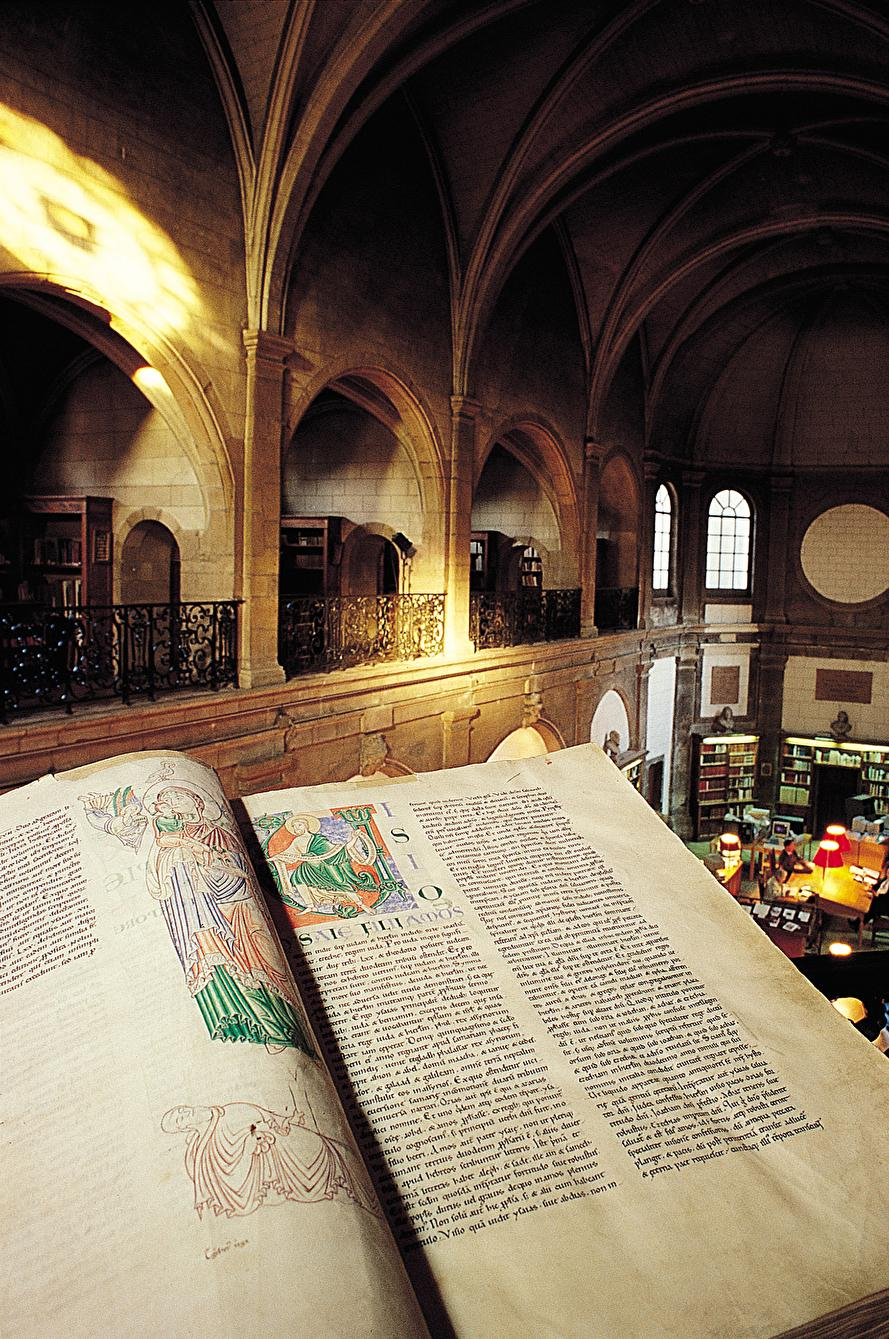
For centuries, monasteries were centers of learning. Monks copied manuscripts, maintained libraries, taught students, recorded local events, and preserved works that might otherwise have disappeared. Their schools helped knowledge travel beyond monastery walls and supported the slow expansion of literacy and learning.
Learning as Service
Monastic education was not merely about collecting books. It trained scribes, teachers, clergy, administrators, and healers. Monasteries often offered hospitality, cared for travelers, and shared practical knowledge about agriculture, medicine, and craftsmanship.
A Brief History of Monks and Monastic Education
The history of monasticism is especially interesting because monks were not simply religious figures – they were, at various times and places, teachers, scholars, farmers, physicians, librarians, translators, scientists, brewers, engineers, and custodians of knowledge.
Monasticism developed in several parts of the world, including Christian Europe, the Middle East, India, China, Tibet, and elsewhere. Although traditions differed considerably, a common idea was that people could devote their lives to disciplined living, contemplation, learning, service, and the pursuit of spiritual understanding.
In Christian Europe, monasticism became particularly important after the decline of the Western Roman Empire in the 5th century. As political institutions fragmented, monasteries often became unusually stable communities. They provided places where people could live, work, study, preserve books, teach others, and develop practical skills.
One of the most influential figures was Benedict of Nursia, whose Rule of Saint Benedict, written around the 6th century, emphasized a balance of prayer, work, study, discipline, and community life.
That combination became enormously consequential.
Monasteries as Centers of Education
During the early medieval period, literacy was relatively uncommon in much of Western Europe. Formal education was not broadly available to ordinary people.
Monasteries helped preserve and transmit knowledge.
Monks copied manuscripts by hand in scriptoria, producing copies of religious texts but also works involving:
- History
- Philosophy
- Mathematics
- Astronomy
- Medicine
- Agriculture
- Law
- Grammar
- Literature
- Geography
- Classical Greek and Roman writings
The importance of this work wasn’t merely that monks “saved old books.”
They created an infrastructure for preserving, organizing, teaching, and transmitting information from one generation to another.
A monk who learned something could teach another monk. That person could teach students. A manuscript could be copied repeatedly. Eventually, knowledge could move beyond the monastery into schools, universities, churches, governments, and communities.
In that sense, monasteries functioned somewhat like early knowledge networks.
Education Was More Than Reading Books
Perhaps the most important aspect of monastic education was that it wasn’t necessarily limited to abstract knowledge.
Monasteries were communities where people experimented with ways of making life work better.
Monks had to feed themselves.
They therefore had practical incentives to improve:
Agriculture → food production → better nutrition → larger communities
They had to preserve food.
Food preservation → reduced waste → greater food security
They had to care for sick members of the community.
Medical knowledge → better treatment → improved survival
They had to build and maintain buildings.
Engineering → better construction → improved living conditions
They needed to communicate.
Literacy → record keeping → transmission of knowledge
They needed to manage property and resources.
Accounting → better administration → economic stability
The monastery consequently became a place where intellectual and practical knowledge could reinforce each other.
Monks and Agricultural Improvement
One of the less appreciated contributions of medieval monasteries was their role in agriculture.
Monasteries owned or managed substantial amounts of land in some regions. Monks therefore had strong incentives to understand:
- Crop rotation
- Soil management
- Irrigation
- Drainage
- Animal husbandry
- Orchards
- Herb cultivation
- Food preservation
- Milling
- Brewing
Monastic communities could accumulate agricultural knowledge over decades and pass it to successors.
A farmer working alone might discover that a particular crop grew better under certain conditions.
A monastery could record the observation, repeat it, teach it, and incorporate it into its practices.
That distinction is enormously important.
Knowledge becomes much more powerful when it becomes institutional rather than personal.
Monasteries as Early Hospitals
Monastic communities also played an important role in the development of organized care for the sick.
Many monasteries maintained infirmaries and cultivated medicinal plants.
Monks accumulated knowledge about:
- Herbs
- Wounds
- Hygiene
- Diet
- Illness
- Basic medical treatments
They were not modern physicians, and medieval medicine contained many practices we now know were ineffective.
Nevertheless, the broader concept was important:
Knowledge about health could be collected, preserved, taught, and passed forward.
Monasteries therefore contributed to the institutional tradition that eventually developed into more sophisticated hospitals and medical schools.
The Economic Effect of Knowledge
This is where the story becomes particularly interesting.
Education doesn’t merely make people “smarter.”
It can change their economic possibilities.
Imagine a person born into a poor medieval family.
Their economic options might be largely determined by:
- The land available to their family
- Their father’s occupation
- Their ability to inherit property
- Their physical labor
- Their local community
Education introduced another possibility: Skill.
A person who could read and write could potentially become:
- A teacher
- A scribe
- An administrator
- A cleric
- A bookkeeper
- A government official
- A scholar
- A lawyer
- A translator
In other words, education could allow someone to exchange knowledge and skill for economic opportunity rather than relying entirely on physical labor or inherited wealth.
That was a profound social change.
The Monastery as a Ladder of Social Mobility
This doesn’t mean medieval monasteries were egalitarian institutions. They weren’t.
Social class remained extremely important.
But religious institutions sometimes provided one of the relatively unusual paths through which a person could gain status through learning and ability rather than wealth alone.
A talented individual could acquire literacy, become educated, develop specialized knowledge, and eventually hold a position of responsibility.
This created an early form of what we would now call social mobility.
The basic principle was:
Education gives a person something that cannot easily be taken away: the ability to acquire more knowledge.
That creates a compounding effect.
Someone who learns to read can read another book.
Someone who learns mathematics can learn more advanced mathematics.
Someone who learns agriculture can improve farming.
Someone who learns accounting can manage larger enterprises.
Someone who learns medicine can learn additional treatments.
Knowledge becomes productive capital.
Knowledge and Happiness
There is also a less tangible part of this story.
Monastic education was not solely concerned with making people wealthy.
A major objective was developing a meaningful and disciplined life.
Monastic traditions emphasized things such as:
- Community
- Purpose
- Self-discipline
- Service
- Reflection
- Learning
- Charity
- Simplicity
- Responsibility
These ideas are interesting even from a modern, non-religious perspective.
A person who has:
Purpose + community + useful skills + education + meaningful work
may have a fundamentally different experience of life than someone who has none of those things.
Education can therefore improve quality of life in two different ways.
Material improvement
Knowledge can produce:
Better agriculture → more food
Better sanitation → less disease
Better technology → less physical labor
Literacy → better administration
Skills → better employment
Education → greater economic opportunity
Human improvement
Education can also produce:
Understanding → curiosity
Curiosity → discovery
Discovery → accomplishment
Accomplishment → confidence
Community → belonging
Purpose → meaning
These aren’t exclusively religious concepts.
They are characteristics of a functioning civilization.
Monks and the Preservation of Civilization
Perhaps the biggest historical contribution was not that monks invented everything.
They didn’t.
The more accurate story is that monasteries became repositories and transmission systems for knowledge during periods when other institutions were weak or fragmented.
Consider knowledge as a chain:
Ancient civilization
↓
Books and oral traditions
↓
Monastic preservation
↓
Copying and teaching
↓
Schools
↓
Universities
↓
Scientific scholarship
↓
Printing
↓
Mass education
↓
Modern knowledge economy
The monastery was only one part of this enormously complicated process, but it was an important link.
And Then Came the Universities
The educational traditions preserved and developed in medieval religious institutions eventually contributed to the emergence of European universities.
Institutions such as the University of Bologna, University of Paris, and University of Oxford developed within a broader intellectual environment heavily influenced by medieval Christianity.
Universities expanded education beyond monasteries.
The subjects became increasingly systematic:
Grammar → rhetoric → logic → mathematics → natural philosophy → medicine → law
Eventually this intellectual tradition contributed to the Renaissance, scientific revolution, Enlightenment, and modern educational system.
An Important Qualification
It would be historically inaccurate to portray monks as single-handedly creating modern civilization.
Knowledge was also preserved and developed by:
- Islamic scholars
- Jewish scholars
- Byzantine scholars
- Chinese scholars
- Indian scholars
- Persian scholars
- Classical Greek and Roman thinkers
- Independent craftsmen and engineers
- Agricultural communities
- Merchants
- Physicians
- Philosophers
In fact, medieval Europe benefited enormously from knowledge that traveled through the Islamic world, particularly mathematics, medicine, astronomy, and philosophy.
So the better historical argument is not: “Monks created civilization.”
It is: Monastic institutions were among the important mechanisms through which knowledge was preserved, developed, organized, and transmitted to subsequent generations.
That distinction matters.
The Larger Lesson
There is a fascinating principle underneath the entire history of monastic education:
Knowledge compounds.
A person learns something.
They teach another person.
That person improves it.
Someone records it.
Another generation studies it.
Someone combines it with another idea.
Eventually the original piece of knowledge can contribute to something dramatically larger.
A farming technique can become agricultural science.
A monk’s handwritten medical notes can become part of a medical tradition.
A lesson in mathematics can eventually contribute to engineering.
A school can eventually become a university.
A library can become a civilization’s intellectual memory.
And an educated individual who begins life with very little material wealth can acquire something extraordinarily valuable:
the ability to learn.
That is one of the reasons education has historically been such a powerful mechanism for improving both quality of life and social mobility.
In one sentence:
Monasticism demonstrated one of civilization’s most powerful ideas: when knowledge is preserved, taught, shared, and continually improved, it can transform not only individuals but entire communities—turning accumulated learning into better health, greater productivity, economic opportunity, social mobility, and a richer sense of purpose and human flourishing.